
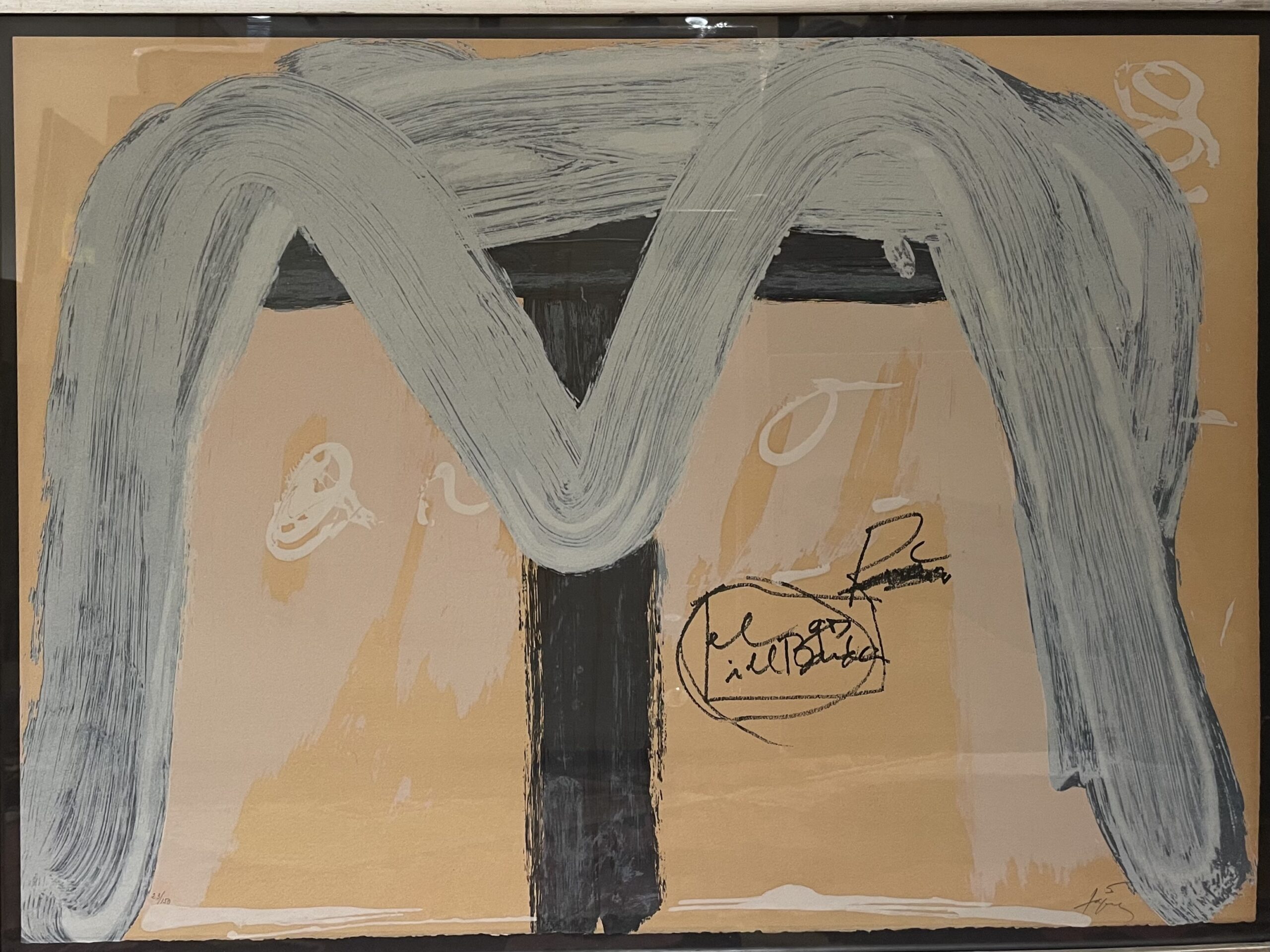
Berliner Suite
Antoni Tàpies
Available
€2.500
+5% VAT
Please select a copy before adding to cart
IQONIQ collaborates with renowned historical galleries in the Italian and international art scene to ensure that every print is meticulously verified and certified. Our dedication to transparency and quality allows us to offer artworks of proven value, enriching our clients’ collections with unique, authentic pieces of verified origin.
For more information on our provenance verification procedure, click here.

Description
Provenance: Il bello dell arte moltiplicata
Dimensions: 55,5 x 76 cm
Signature: Pencil signature
Product conditions: Mint
Technique: Lithography
ANTONI TÀPIES
Born in Barcelona in 1923. He was a Spanish painter, sculptor and art historian, among the most significant exponents of the Catalan artistic movement closest to the research of international informal art. Having enrolled in the faculty of law at the University of Barcelona, Tapies left his studies to dedicate himself entirely to self-taught art. Although his early works show the influences of surrealism, Tàpies quickly turns towards Informal research using recycled or waste materials, ropes, paper or marble dust. In 1948 he exhibited his works for the first time at the 1st October Salon in Barcelona. Thanks to a scholarship from the French Institute he went to Paris where he met Picasso. In 1950 he was selected to represent Spain at the Venice Biennale, where he would be invited again over the years.
In 1960 he participated in the New Spanish Painting and Sculpture exhibition at the MOMA in NY. Tapies develops an abstract style full of symbolism, giving great importance to the material support which in his works transcends its own state to tell a profound analysis of the human condition. In the 1970s his work acquired a greater political tone, of Catalan claim and opposition to the Franco regime, usually with words and signs on the paintings. Since 1990, the Fundació Antoni Tàpies in Barcelona has opened its doors to the public, a place dedicated to contemporary art which today collects the artist’s work. During his career, Tapies was awarded some of the most prestigious awards and exhibited in the most important museums around the world. Matter, at the centre of the artist’s research, becomes for Tapies a strong means of expression of reality, of the weight of existing, of a consummated experience whose fragments are found in the work.
